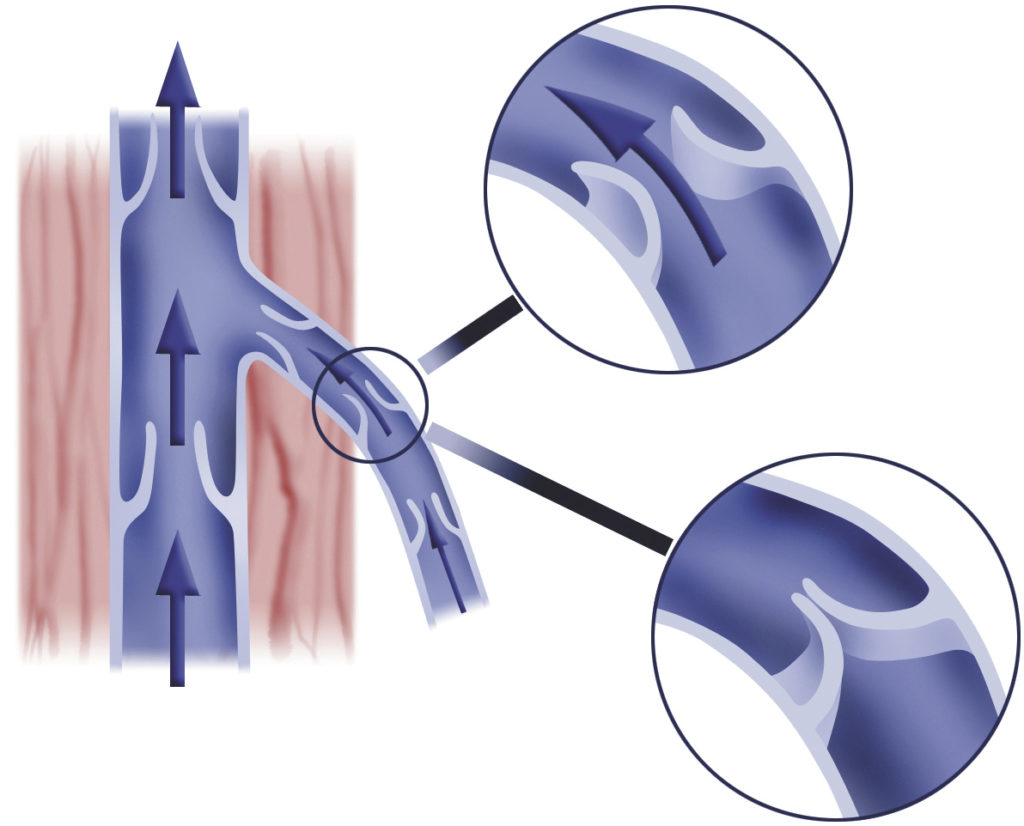
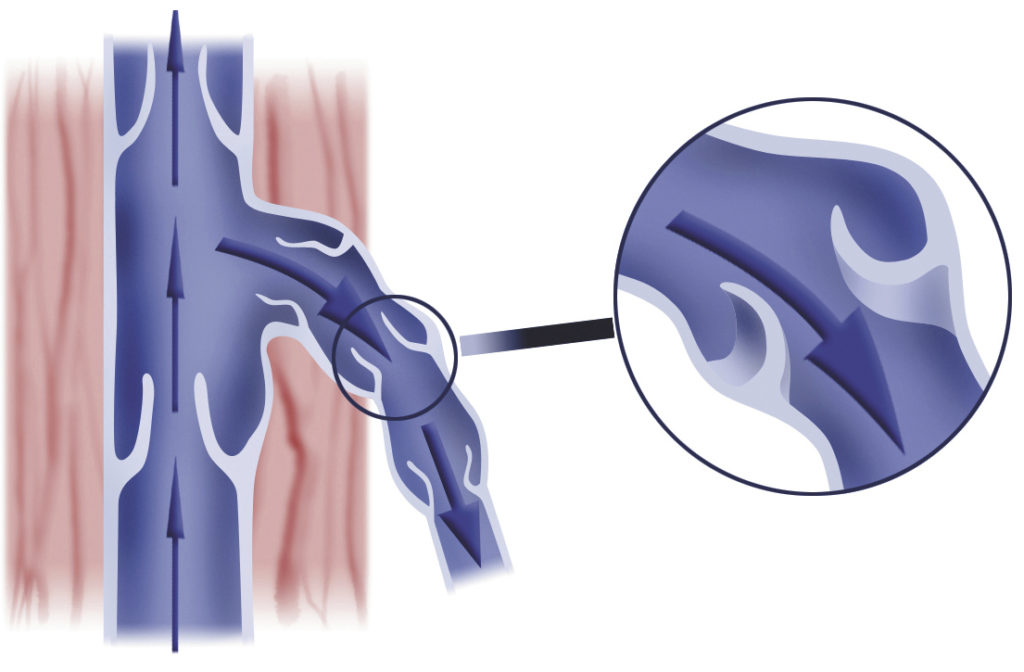
Source: Getty Images. This is not an actual patient. Results may vary.
In normal veins, tiny one-way valves direct the flow of blood. In some people, these valves may malfunction.
When they do, blood leaks backwards where it pools and pressure builds. Weakened and damaged by this process, the veins become enlarged, twisted, and rope-like—visible near the surface most commonly in the legs and ankles.
The first physical symptom of varicose veins is usually their appearance. As the disease progresses, though, other symptoms occur. These include:
Unless the underlying cause of varicose veins is treated, over time they will usually enlarge and worsen.
If you have varicose veins, you probably know what they look like. But varicose veins are more than just a cosmetic concern: they have the potential to develop into a serious medical issue.
With blood flow compromised, skin conditions can result—from intense itching to ulceration. Vein rupture and bleeding can occur, as well as blood clots. As a sign of chronic venous insufficiency, varicose veins demand your attention.
References